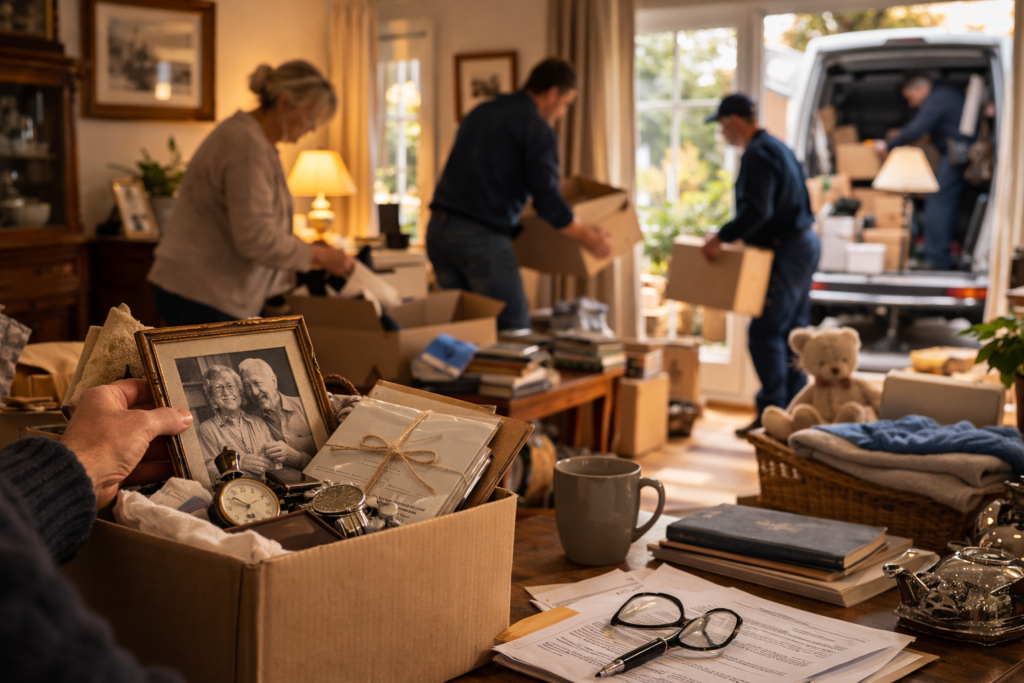
Are you planning to renovate your house in 2026 without draining your savings or making fatal mistakes? This practical guide provides you with a clear method to transform a home into a comfortable, economical, and sustainable asset. It explains why starting with diagnostics and major work protects your budget, how to prioritize energy renovations to maximize aids, and which smart home technologies are truly worth it. Illustrated by the journey of Lucie and Karim, owners of a longère to renovate, the text details the concrete steps — from planning to finishing — and highlights technical solutions suitable for both older buildings and newer houses. You will also find numerical benchmarks to budget your project, tips to compare quotes without being fooled, and a selection of high-impact renovations on value and comfort. The goal: effective work, respect for heritage, and a controlled budget optimization so that your renovation is a serene investment.
- Priority to major work and thermal insulation to secure the investment.
- Mandatory work planning: diagnostics, permits, then construction.
- Effective work to prioritize: attics, windows, heating system.
- Renovation grants and aids are cumulative if you work with qualified contractors.
- Eco-friendly materials and smart home technologies to reduce your bill and enhance the property.
How to effectively renovate your house in 2026: priorities and framework
Renovation is not just about redecorating. It’s about adapting the building to your needs while improving performance and durability. From the start, conduct a comprehensive diagnostic (structure, electricity, plumbing, DPE). This assessment serves as a roadmap and determines the order of interventions: first, secure the house, then improve comfort, and finally personalize. Lucie and Karim’s journey shows the importance of validating technical points before buying furniture: after a diagnostic, they prioritized energy renovations, obtained aid, and then modernized the living spaces.

Diagnostic, permits, and work planning: the basis for a controlled site
Before any action, you need to face the truth. A complete diagnostic identifies emergencies (roof, sanitation, humidity) and helps establish a logical schedule. Check with the urban planning service: preliminary declaration or building permit depend on the scope of the work. The Local Urban Plan (PLU) may impose choices of materials and colors. For projects exceeding 150 m², an architect is mandatory — but even for more modest sites, their expertise prevents many mistakes.
Insight: anticipate the administrative requirements to avoid costly blockages and delays.
Budget and budget optimization: how to estimate without being surprised
Estimating is the ultimate test. Get into detail: item by item, materials and labor. For a complete renovation, expect often between 1,000 and 1,500 € per m², but adjust according to the state of the dwelling and desired service level. Allow a safety margin of 10 to 15% for contingencies.
| Expense item | Indicative budget share | Why it’s crucial |
|---|---|---|
| Major work (foundations, roof) | 25% – 35% | Ensures the building’s longevity and avoids future repairs. |
| Thermal insulation and systems (heating, windows) | 20% – 30% | Direct impact on consumption and DPE: long-term savings. |
| Finishing work (partitions, networks) | 25% – 35% | Allows adapting spaces and installing necessary equipment. |
| Finishes (painting, decoration) | 5% – 10% | Personalizes the result but should come last. |
Insight: investing in structural elements and insulation maximizes value and reduces budget risks.
Energy renovations and renovation grants: when to act to maximize aid
Measures for energy efficiency are often the most cost-effective. Prioritize attic insulation, replacing single glazing, wall insulation, and installing a high-performance system (heat pump). Since 2025, certain aids can cover a significant portion of the work: it is essential to validate the files before starting and to choose certified RGE artisans to unlock subsidies.
Insight: preparing your aid files in advance changes the financial outcome of the project.
After the technical side, turn to coordination: do not start work without the approved aid justifications.
Eco-friendly materials and old buildings: techniques for renovating without harming heritage
Respect the breathability of stone walls
Old houses have a particular way of « breathing. » Using cement or polystyrene on stone walls causes moisture disorders. Favor bio-based insulators (wood fiber, hemp) and lime renders. Address rising humidity through drainage or appropriate systems and install effective ventilation.
Insight: for the old, efficiency comes from specific technical solutions, not generic recipes.
Smart home technologies and home automation: comfort, energy savings, and management
Useful home automation focuses on consumption control: programmable thermostats, zoned heating, lighting controls, and presence detectors. These systems improve comfort while reducing bills. Integrating smart home technologies during renovation is often simpler than adding non-integrated solutions later.
Insight: think of home automation as a tool for savings rather than a gadget.
After installation, test usage scenarios to confirm expected savings and comfort.
Choosing qualified contractors: comparison and method
Request at least three detailed quotes and compare services, timelines, and insurances (10-year guarantee). Do not rely solely on price. Check for the RGE label for energy renovations. If you lack time or expertise, opt for a turnkey offer with a project manager or architect.
- Check references and previous projects.
- Request insurance certificates and the 10-year guarantee.
- Specify materials and brands in the quote to avoid substitutions.
Insight: a good craftsman is an investment that avoids future additional costs.
Concrete examples and practical cases: Lucie and Karim’s journey
Lucie and Karim bought a longère of 120 m². After diagnostics, they started by renovating the roof and replacing the joinery. They insulated the attic with wood fiber and installed a heat pump. By working with qualified contractors, they obtained aid covering a significant portion of the work. They then rethought the interior volumes to create a large living space. Their approach illustrates the logical order of interventions and the importance of professional oversight.
Insight: a phased and managed project reduces stress and optimizes expenses.
Practical advice for effective work and successful budget optimization
- Prioritize major work and insulation before decoration.
- Consolidate a fund of 10–15% for unforeseen expenses.
- Compare several quotes with the same specifications.
- Request RGE certificates to unlock renovation grants.
- Choose eco-friendly materials for durability and added value.
Insight: a few simple rules protect your budget and improve final quality.
Resources and inspiration for layout and decoration
To find layout ideas and decoration inspirations suitable for your project, consult specialized sources that offer photos, trends, and practical advice. These references help choose finishes that are coherent with the building and to envision friendly outdoor spaces.
Some useful links for inspiration: interior decoration ideas, interior layout inspiration, house design tips, living room layout, selection of eco-friendly materials.
Insight: good inspiration avoids the risk of costly stylistic errors.
Actions to start today for smooth progress
1) Carry out a complete diagnostic. 2) Calculate a budget estimate with a margin. 3) Submit your aid requests before starting work. 4) Select qualified contractors and request 3 quotes. These structured steps allow you to launch a controlled and profitable site.
Insight: preparation in advance is the key to a successful and surprise-free renovation.
{« @context »: »https://schema.org », »@type »: »FAQPage », »mainEntity »:[{« @type »: »Question », »name »: »Quel budget prévoir pour rénover entièrement une maison de 100 m² ? », »acceptedAnswer »:{« @type »: »Answer », »text »: »Le budget varie selon l’état initial et les choix techniques : généralement entre 100 000 et 150 000 € pour une rénovation complète incluant isolation et mise aux normes. Prévoyez une marge de 10 à 15 % pour les imprévus. »}},{« @type »: »Question », »name »: »Quelles sont les rénovations prioritaires pour améliorer le DPE ? », »acceptedAnswer »:{« @type »: »Answer », »text »: »Commencez par l’isolation des combles, le remplacement des simple-vitrages, l’isolation des murs et l’installation d’un système de chauffage performant (pompe à chaleur). Ces actions offrent le meilleur retour sur investissement en termes d’économie d’énergie. »}},{« @type »: »Question », »name »: »Dois-je obligatoirement travailler avec un architecte ? », »acceptedAnswer »:{« @type »: »Answer », »text »: »L’architecte est obligatoire si la surface après travaux dépasse 150 m². Pour les projets plus petits, son expertise reste recommandée pour éviter des erreurs de conception et faciliter les démarches administratives. »}},{« @type »: »Question », »name »: »Comment choisir entre faire soi‑même et confier à des entrepreneurs qualifiés ? », »acceptedAnswer »:{« @type »: »Answer », »text »: »Réservez les petits travaux (peinture, pose de sols simples) au bricolage si vous avez le temps. Pour l’électricité, la plomberie, la structure ou l’isolation, privilégiez des professionnels certifiés et assurés. Cela sécurise les aides et le résultat. »}}]}Quel budget prévoir pour rénover entièrement une maison de 100 m² ?
Le budget varie selon l’état initial et les choix techniques : généralement entre 100 000 et 150 000 € pour une rénovation complète incluant isolation et mise aux normes. Prévoyez une marge de 10 à 15 % pour les imprévus.
Quelles sont les rénovations prioritaires pour améliorer le DPE ?
Commencez par l’isolation des combles, le remplacement des simple-vitrages, l’isolation des murs et l’installation d’un système de chauffage performant (pompe à chaleur). Ces actions offrent le meilleur retour sur investissement en termes d’économie d’énergie.
Dois-je obligatoirement travailler avec un architecte ?
L’architecte est obligatoire si la surface après travaux dépasse 150 m². Pour les projets plus petits, son expertise reste recommandée pour éviter des erreurs de conception et faciliter les démarches administratives.
Comment choisir entre faire soi‑même et confier à des entrepreneurs qualifiés ?
Réservez les petits travaux (peinture, pose de sols simples) au bricolage si vous avez le temps. Pour l’électricité, la plomberie, la structure ou l’isolation, privilégiez des professionnels certifiés et assurés. Cela sécurise les aides et le résultat.